Measure Before You Buy a Sofa
A calm, practical room-measuring routine can prevent the most expensive kind of furniture surprise.
Start with the route, not the room
A sofa has to reach the room before it can live there. Measure the narrowest doorway, hallway, stair turn, elevator opening, and ceiling height along the delivery path. Record the clear opening with doors and removable trim accounted for. Compare those numbers with the packaged dimensions when a retailer provides them; a sofa tilted on end may need more height than its listed width suggests.
Map the footprint
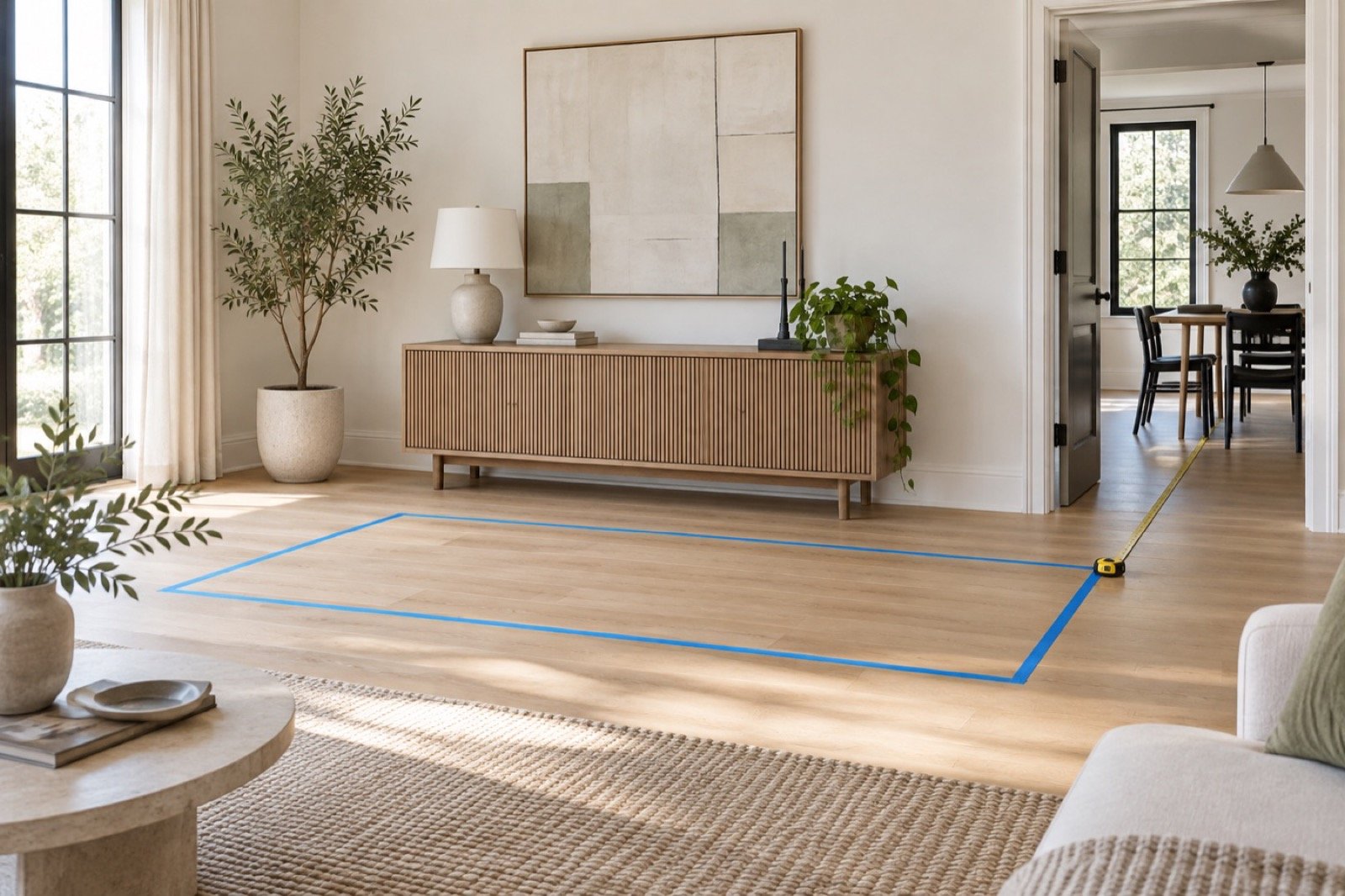
Use painter’s tape to mark the sofa’s full width and depth on the floor. Add the space needed for side tables, lamps, walking paths, and reclining or sleeper mechanisms. Live with the taped outline for a day. Walk through the room, open nearby doors, and check whether the outline blocks vents, outlets, or a natural route through the space.
Read the dimensions in the right order
Overall width describes the full outside span. Seat width tells you how much usable sitting space remains after arms. Overall depth and seat depth are different: deep seats suit lounging, while shallower seats often make upright sitting easier. Seat height affects how easy it is to stand. Back height matters under windows and when you want head support.
Keep the evidence
Save a simple note with every measurement and a photo of the taped footprint. When comparing options, use the same checklist for each one. A beautiful sofa that cannot clear the stair landing is not a find; it is a very upholstered problem.
This independent editorial guide offers general shopping considerations. Product specifications, safety instructions, prices, availability, return terms, and warranties can change; verify the current details with the manufacturer or retailer before purchasing.