How to Compare Mattresses Without the Mystery
Ignore the cloud names and compare construction, firmness, trial terms, and the way you actually sleep.
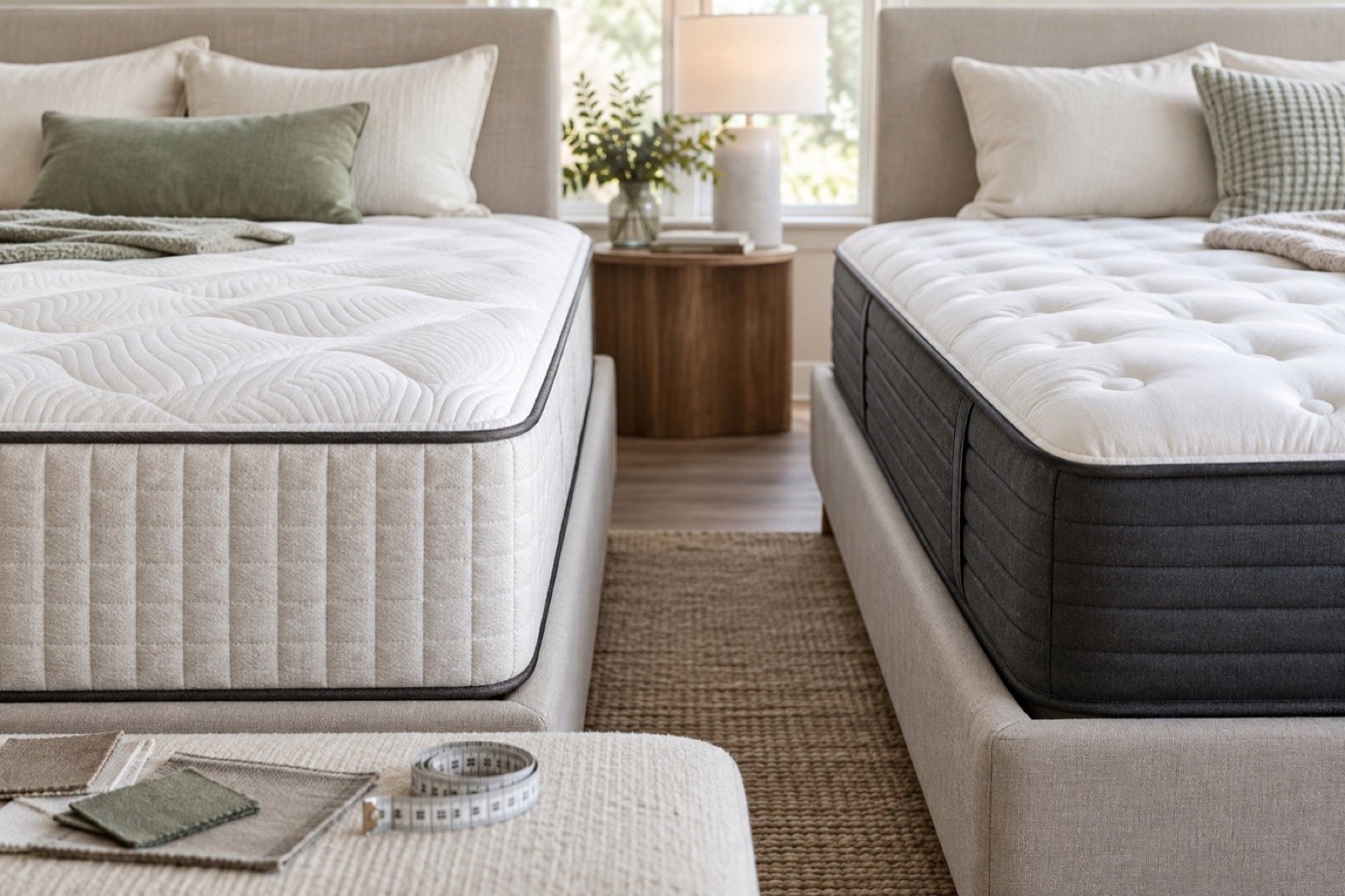
Begin with sleep position and feel
Side sleepers often prefer more pressure relief at shoulders and hips. Back and stomach sleepers may prioritize a steadier surface that limits sinking through the middle. Body weight, temperature, mobility, and whether two people share the bed all change what “firm” feels like. Treat a firmness number as a starting point rather than a universal measurement.
Translate the construction
Foam beds can isolate motion well and vary widely in temperature control. Innerspring beds use coils as the main support system. Hybrids combine coils with substantial comfort layers. Latex is usually springier and may appeal to shoppers who dislike a slow, sinking feel. Layer count alone does not prove quality; density, coil design, material transparency, and the completed feel matter more.
Study the trial, return, and warranty rules
A long trial is useful only if the return process is workable. Check whether there is a required break-in period, pickup fee, exchange limit, or regional restriction. Read what the warranty calls a defect, how deep an impression must be, and whether the foundation requirements are specific. Save the terms in effect on the purchase date.
Compare the complete cost
Include the foundation, adjustable base, delivery, old-mattress removal, protector requirements, and possible return fees. A slightly higher price can be the better value when the return process, materials, and delivery service reduce the risk of a costly mistake.
This independent editorial guide offers general shopping considerations. Product specifications, safety instructions, prices, availability, return terms, and warranties can change; verify the current details with the manufacturer or retailer before purchasing.